
How Massage Actually Supports the Nervous System
Massage supports the nervous system by activating the parasympathetic branch, stimulating the vagus nerve, and signalling safety to a body that has been living in stress. This is a measurable physiological shift, one that changes your hormone levels, your heart rate, and the state your nervous system operates from, often within minutes of treatment beginning.
For many people, the idea of massage feels like a treat, something you book when you're exhausted or celebrating a birthday. But the science behind what happens during a massage tells a different story. Touch is one of the most direct ways humans have of communicating safety to the nervous system, and that communication has real, lasting effects on how the body functions.
This article explores the mechanisms behind those effects, drawing on neuroscience, Polyvagal Theory, and the clinical evidence for massage as a tool for nervous system regulation, not just muscle relief.
What Is the Nervous System and Why Does Touch Affect It?
The nervous system governs almost everything your body does, from breathing and digestion to how you process stress and experience pain. It operates through two primary branches: the sympathetic nervous system, which drives the fight-or-flight response, and the parasympathetic nervous system, which governs rest, recovery, and repair.
When you are under chronic stress, overwhelmed by work or family responsibilities, or carrying long-standing physical tension, the sympathetic branch tends to dominate. This keeps cortisol elevated, muscles contracted, digestion sluggish, and sleep disrupted. The body stays in a state of low-level alert, even when no immediate danger is present.
Touch interrupts that pattern. Pressure receptors in the skin called mechanoreceptors send direct signals to the brain when they are stimulated through massage. These signals travel along sensory nerve pathways to the hypothalamus and brainstem, where they trigger a measurable downshift in sympathetic activity and an increase in parasympathetic tone.
Research published in the International Journal of Neuroscience found that massage therapy reduces cortisol levels by an average of 31% and increases serotonin and dopamine by 28% and 31% respectively.
The Vagus Nerve: The Key to Understanding Nervous System Massage
The vagus nerve is the longest cranial nerve in the body, running from the brainstem down through the neck, chest, and abdomen. It is the primary pathway of the parasympathetic nervous system and the nerve most directly influenced by massage therapy.
When stimulated, the vagus nerve slows the heart rate, deepens the breath, reduces inflammation, and signals the body to shift out of survival mode and into a state of safety and restoration. Vagal tone, the measure of how well this nerve functions, is one of the most important indicators of overall health and resilience.
Massage activates the vagus nerve through several pathways. Slow, rhythmic strokes along the neck and spine directly stimulate vagal branches. Pressure applied to the abdomen engages the enteric nervous system, which connects to the vagus. Even the warmth and sustained contact of a practitioner's hands activate C-tactile afferent fibres in the skin, a specific type of sensory nerve that evolved to respond to gentle touch and carries signals directly to the social and safety circuits of the brain.
What Does Vagus Nerve Activation Feel Like?
Most people describe a distinct shift during massage that goes beyond muscle relaxation. The breath deepens spontaneously. The jaw unclenches. A feeling of heaviness or warmth spreads through the limbs. This is the physiological signature of vagal activation, the ventral vagal state described by neuroscientist Stephen Porges in his Polyvagal Theory.
Polyvagal Theory and What It Reveals About Massage
Polyvagal Theory, developed by Dr Stephen Porges, describes the nervous system not as a simple on-off switch between stress and relaxation, but as a three-tiered hierarchy of responses. Understanding this framework changes the way we think about what massage actually does.
The three states described in Polyvagal Theory are:
Ventral vagal state: safety, social connection, calm presence, open and engaged
Sympathetic state: mobilisation, fight or flight, anxiety, hypervigilance, tension
Dorsal vagal state: shutdown, freeze, collapse, disconnection, numbness
Many people who seek massage are living predominantly in the sympathetic or dorsal vagal state. Chronic stress, unresolved tension, and years of pain keep the nervous system locked in survival patterns that cannot be talked, exercised, or willed away. They require a bottom-up intervention, meaning one that starts in the body rather than the mind.
Massage is a bottom-up intervention. Through touch, rhythm, warmth, and the felt sense of being cared for by another person, it communicates to the nervous system that it is safe to downregulate. The ventral vagal pathway activates. The body remembers what it feels like to be at ease.
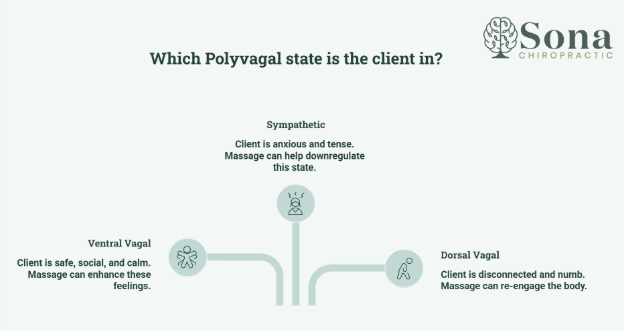
How massage treatment can affect each nervous system state
What Happens to Your Body During and After a Massage?
The physiological changes that massage triggers are both immediate and cumulative. During a session, most people notice their breathing slowing, their muscles softening, and their mind becoming less busy. These reflect measurable biological shifts happening in real time.
After a massage, the effects of nervous system regulation continue. Cortisol remains lower for several hours. Muscle tension, which is partly governed by the nervous system's ongoing signals to stay contracted, takes time to return to baseline. Sleep quality often improves in the days following treatment, because the nervous system is better able to enter the deep, restorative phases that chronic stress disrupts.
For people experiencing chronic stress, persistent nervous tension, or long-term physical holding patterns, regular massage can create a cumulative effect. Each session reinforces the nervous system's capacity to shift into a regulated state, gradually building what practitioners describe as greater nervous system resilience over time.
The Neurochemistry of Massage: What Changes in Your Body
The nervous system effects of massage involve specific neurochemical changes. These include:
Cortisol reduction: the body's primary stress hormone decreases, lowering the physiological burden of chronic stress (Tiffany Field et al, NIH)
Serotonin increase: a neurotransmitter that supports mood stability, sleep regulation, and pain modulation (Tiffany Field et al, NIH)
Oxytocin release: the bonding hormone that promotes feelings of safety, trust, and connection (Vera Morhenn et al.)
Dopamine increase: supports motivation, pleasure, and reward processing (Tiffany Field et al.)
Substance P reduction: a neuropeptide associated with pain transmission; lower levels mean reduced pain sensitivity (Tiffany Field et al.)
These changes explain why people often leave a massage feeling physically looser as well as emotionally lighter, more present, and more resilient. The nervous system has genuinely shifted state.
What Is a Nervous System Massage?
A nervous system massage is any massage approach that is specifically designed to downregulate the sympathetic nervous system and activate the parasympathetic branch. This is different from a massage that simply addresses muscle knots or post-exercise soreness. It takes into account the pace, pressure, rhythm, and therapeutic relationship as tools for nervous system communication.
At Sona Chiropractic in Kirriemuir, all massage treatments are delivered through a nervous-system-first lens. This means the practitioner's pace, pressure, and presence are calibrated to support regulation, not just physical recovery. Our range of holistic treatments include Swedish massage, deep tissue massage, hot stone massage, sports massage, and cupping and fascia therapy, each chosen and adapted based on what your nervous system needs on that particular day.
Who Benefits From Massage for the Nervous System?
The people who tend to benefit most from nervous-system-focused massage are those who have been carrying stress in their bodies for a long time. This includes women managing careers and caring responsibilities who rarely have time to stop, people living with chronic pain that has not resolved with other approaches, individuals recovering from burnout who find it difficult to switch off even during rest, and anyone who has experienced a period of sustained anxiety or emotional overwhelm.
The body stores stress. Muscles hold tension, fascia tightens around it, and the nervous system learns to stay on guard. Massage creates the conditions for that stored stress to begin releasing by giving the nervous system repeated, safe experiences of being able to let go.
Based in Kirriemuir and serving patients across Angus and Perthshire, Sona Chiropractic offers nervous-system-informed massage for people who are ready to feel different.
Coming Home to Your Body
Massage is rarely just about the muscles. For the large number of people living with chronic stress, anxiety, physical tension, and the exhaustion of never truly switching off, it is one of the most direct routes back to a felt sense of safety in the body.
The nervous system does not distinguish between types of stress. It responds to what it perceives. And what it perceives during a thoughtful, nervous-system-informed massage is exactly what it has been waiting for: that it is safe, that it is held, and that it can, finally, let go.
If you are based in Angus or Perthshire and would like to explore how massage can support your nervous system, the team at Sona Chiropractic in Kirriemuir offers a range of treatments designed around your whole-person needs. You can book an appointment or enquire to find out which treatment is right for you.
Frequently Asked Questions About Massage and the Nervous System
How quickly does massage affect the nervous system?
Changes in heart rate, breathing, and cortisol can begin within the first 10 to 15 minutes of a massage session. The shift into a parasympathetic state often happens before the end of the first treatment, though the cumulative effects of regular massage build over several sessions.
Is massage good for nervous system dysregulation?
Yes. Regular massage is a well-evidenced body-based approach for nervous system dysregulation, particularly for people who have been in a sustained state of sympathetic activation or chronic stress. The combination of touch, warmth, and regulated co-presence with a calm practitioner creates the conditions for the ventral vagal system to activate.
How often should you have a massage for nervous system regulation?
For people with chronic stress or nervous system dysregulation, monthly massage provides a meaningful baseline. Those with more acute symptoms often benefit from fortnightly sessions initially. Your practitioner can advise based on your specific presentation.
