
Key Nervous System Massage Techniques and What to Expect
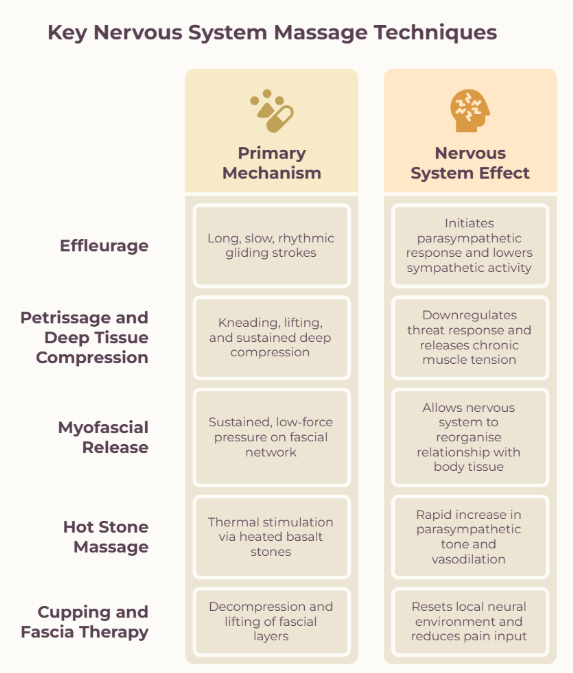
The five core nervous system massage techniques are effleurage, petrissage, myofascial release, thermally-assisted massage such as hot stone, and decompressive techniques such as cupping and fascial therapy, each of which activates the parasympathetic nervous system through a distinct physiological pathway.
These are not simply relaxation methods. They are clinically grounded approaches to nervous system regulation that produce measurable changes in cortisol levels, vagal tone, heart rate variability, and the neurochemical environment of the body.
Understanding how each technique works, and which is most appropriate for different nervous system presentations, helps you arrive at your first appointment with a clearer picture of what is happening, and why it is happening, beneath the surface of a massage session.
This article covers the key nervous system massage techniques used at Sona Chiropractic, the science behind how they target the nervous system, and exactly what to expect at your first nervous-system-focused appointment.
What Makes a Massage Technique Work for the Nervous System?
The nervous system does not respond primarily to mechanical force. It responds to sensory information: the quality, rhythm, temperature, and pace of touch. A massage technique designed for nervous system regulation is calibrated differently from one designed purely for muscle recovery or post-exercise soreness.
Three sensory pathways are particularly significant in how nervous system massage techniques produce their effects:
C-tactile afferent fibres are sensory nerve fibres in the skin that respond specifically to slow, light, skin-level touch at stroking speeds of approximately 1 to 10 centimetres per second, as established in a 2014 study by McGlone, Wessberg and Olausson. These fibres carry signals directly to the social engagement circuits of the brain, communicating safety to the nervous system at a level below conscious thought.
Mechanoreceptors are pressure-sensitive receptors in the skin and underlying tissue. When stimulated rhythmically through massage, they signal to the hypothalamus and brainstem to reduce sympathetic activity and increase parasympathetic tone. This is the neural mechanism behind the physical sense of relaxation that begins during a massage session.
The vagus nerve, the longest cranial nerve in the body, runs from the brainstem through the neck, chest, and abdomen. It is the primary pathway of the parasympathetic nervous system and is directly stimulated by specific contact along the neck, spine, and abdomen. Activating the vagus nerve through massage slows the heart rate, deepens the breath, reduces inflammation, and signals the body to shift out of survival mode.
Every effective nervous system massage technique works through one or more of these pathways. The practitioner's pace, pressure, temperature, and presence communicate directly with the nervous system, not just with the muscles. Our guide to how massage actually supports the nervous system explains this underlying mechanism in full.
Key Nervous System Massage Techniques
Effleurage: The Foundation of Parasympathetic Activation
Effleurage is the most effective nervous system massage technique for initiating the parasympathetic response, using long, slow, rhythmic gliding strokes applied along the length of the body that directly stimulate C-tactile afferent fibres and lower sympathetic activity within minutes of the session beginning. This technique forms the foundation of Swedish massage and is typically the opening and closing movement of any nervous-system-focused session.
The reason effleurage works so efficiently for nervous system regulation lies in its pace and surface contact. Strokes applied at approximately 1 to 10 centimetres per second, with sustained, even pressure from the flat of the hand, activate the specific sensory fibres that carry safety signals directly to the brain's social engagement circuits. The nervous system reads this input as evidence that the environment is safe, triggering a measurable downshift in cortisol and an increase in serotonin and dopamine. A 2005 review analysed data across multiple massage therapy studies and found that massage reduces cortisol by an average of 31% and raises serotonin and dopamine by 28% and 31% respectively.
For anyone wondering how to massage the nervous system at home, slow effleurage on the arms and legs, applied with the flat of the hand in long, consistent strokes from the extremities toward the heart, provides a meaningful approximation of the professional technique. The key variable is pace. Fast, energetic strokes activate the sympathetic nervous system. Slow, rhythmic strokes activate the parasympathetic branch.
Petrissage and Deep Tissue Compression: Releasing Held Tension
Petrissage, the kneading and lifting of soft tissue, and deeper compressive techniques release the chronic muscle tension that the sympathetic nervous system creates and maintains in the body over months and years of stress. When a person lives in a persistent state of sympathetic activation, as many people managing burnout, chronic pain, or long-term stress do, the nervous system instructs muscles to stay contracted. This is not a structural problem in the muscle itself. It is a regulatory one. The nervous system has learned that maintaining physical readiness is safer than releasing.
Petrissage and sustained deep tissue compression communicate to the nervous system that it is safe to let go. The mechanical deformation of the tissue generates sensory input that, when applied rhythmically and within the calm container of a nervous-system-first treatment, downregulates the threat response and allows the muscle to soften.
This is why deep tissue massage delivered within a nervous-system-focused framework produces different results from the same technique applied purely as a mechanical intervention. The technique addresses the tissue. The nervous-system-first approach addresses the regulatory state that is keeping the tissue contracted. Both are necessary for lasting change.
Myofascial Release: Working with the Fascial-Nervous System Connection
Myofascial release targets the fascial network, the connective tissue that surrounds and connects every muscle, organ, and nerve in the body, releasing physical holding patterns that the nervous system has stored in the tissue over years of accumulated stress, injury, or emotional overwhelm. A 2022 systematic review of fascial innervation found that fascia is significantly more densely innervated than the underlying muscle across multiple anatomical sites: the thoracolumbar fascia, for example, showed three times higher nerve fibre density than the adjacent latissimus dorsi muscle. This makes fascia one of the most neurologically rich tissues in the body.
When stress or unresolved physical tension becomes chronic, the fascial network adapts around it, creating patterns of restriction that can persist long after the original stressor has passed. Myofascial release applies sustained, low-force pressure to these restricted areas, holding for 90 seconds or longer until the tissue responds, releases, and allows the nervous system to reorganise its relationship with that part of the body.
The experience is often described as distinctly different from conventional massage. Patients report feelings of heat, pulsing, or a sense of something releasing at a deeper level than muscle. This reflects the fascial network responding to the gentle input, a process that is as much neurological as it is structural. Our guide to how myofascial release massage therapy works explores this technique in more detail.
Hot Stone Massage: Thermal Activation of the Vagal Response
Hot stone massage uses the thermal properties of heated basalt stones to stimulate the parasympathetic nervous system through thermoreceptors in the skin, producing a depth of nervous system regulation that mechanical touch alone is often unable to reach. Heat applied to the skin at the temperatures used in hot stone massage activates thermoreceptors that signal directly to the hypothalamus, the brain region responsible for autonomic regulation.
The effect is a rapid increase in parasympathetic tone, vasodilation throughout the body, and a sense of physical heaviness that reflects the nervous system shifting from alert to ease. Many people describe hot stone massage as the most deeply settling experience of any massage type they have received, particularly those who find it difficult to fully release through touch alone.
The thermal component provides a sensory channel into the nervous system that is different from mechanical pressure, and for many people, particularly those managing chronic nervous tension or sympathetic overactivation, it bypasses the cognitive vigilance that can prevent a full parasympathetic response during massage. The body is more readily convinced it is safe by warmth than by touch when it has learned, through long experience, to stay alert.
Cupping and Fascia Therapy: Decompression and Neural Reset
Cupping therapy and fascial scraping techniques work by creating decompression in the tissue rather than compression, lifting the fascial layers apart, increasing local circulation, and generating a novel sensory signal that resets the local neural environment and reduces the pain input driving sympathetic activation. While cupping is often associated with sports recovery, its nervous system effects are significant and frequently underestimated.
The negative pressure created by cupping lifts the skin and superficial fascia away from the underlying tissue, stimulating mechanoreceptors in a way that compressive techniques cannot. This generates a sensory signal the nervous system attends to with initial alertness that transitions, as the pressure is sustained, into a state of processing and regulation. Many patients report a paradoxical sense of calm during cupping despite its unusual sensation, reflecting the nervous system's shift into a regulated state as it processes the novel input.
The marks left by cupping, which vary in depth of colour depending on the degree of fascial restriction and circulatory stagnation in the area, typically fade within 3 to 7 days and are a normal response to the decompressive effect, not bruising in the conventional sense.
Does Nervous System Massage Support Stress and Nervous Tension?
Yes, nervous system massage reduces the physiological drivers of chronic stress and nervous tension by lowering cortisol, increasing serotonin and dopamine, and activating the vagal pathways that support the ventral vagal state of safety and ease. The same 2005 review found a 31% average reduction in cortisol following massage therapy, alongside increases of 28% in serotonin and 31% in dopamine across the studies analysed.
Chronic nervous tension and sympathetic overactivation are not purely psychological experiences. They are states of the nervous system, characterised by elevated sympathetic activity and reduced vagal tone. Nervous system massage addresses these states directly through the body, providing a bottom-up pathway to regulation that does not require the nervous system to be reasoned into relaxation.
Our what type of massage is best for the nervous system guide at Sona explores how to match specific nervous system presentations to the most appropriate massage approach.
Can Massage Calm an Overactive Nervous System?
Yes, massage calms an overactive nervous system by stimulating the parasympathetic branch, activating the vagus nerve, and providing the repeated, safe sensory experiences that teach an over-regulated nervous system it is possible to downregulate. The key word here is repeated. A single massage session produces measurable nervous system changes that typically persist for several hours to a day. The cumulative effect of regular nervous system massage, received fortnightly or monthly over several months, builds the nervous system's baseline capacity for regulation.
This is not simply symptom management. It is nervous system learning. For people who have been in a state of chronic sympathetic activation for years, that learning takes time, consistency, and a practitioner who understands how to pace the work to the nervous system's current capacity. Sona's approach to all massage treatments is grounded in this principle.
What to Expect at Your First Nervous System Massage at Sona
Your first nervous system massage at Sona Chiropractic begins with a conversation before any hands-on treatment starts. This initial consultation covers your current symptoms, stress levels, sleep quality, what has brought you in, and what you are hoping massage can support. This information shapes every decision that follows: the technique selected, the pressure used, the areas prioritised, and the pace of the session.
For someone in a high state of sympathetic activation, beginning with lighter effleurage and building gradually is more effective than opening with deep tissue work, which the nervous system may register as an additional demand rather than an invitation to settle. The practitioner adapts the approach to your nervous system state session by session, not just appointment by appointment.
You will be invited to lie on a treatment table, appropriately draped, in a warm and calm treatment room. The pace of a nervous-system-focused session is slower than you may expect if your previous experience of massage has been entirely sports or recovery-based. The intention is to give your nervous system time to register the sensory input, process it, and shift state in response.
From the physical space to the way we interact, every detail at Sona Chiropractic is designed to promote calm, comfort, and a sense of being at home in your body. This is not a cold, clinical environment. It is a warm, welcoming space where you are listened to deeply, cared for genuinely, and supported as a whole person.
Most people notice changes during the session: breathing deepening spontaneously, the jaw unclenching, a feeling of heaviness or warmth spreading through the limbs. These are signs of vagal activation, the body moving from the sympathetic state of alert into the ventral vagal state of ease. Some people feel emotional during massage. This is entirely normal. The nervous system does not separate physical and emotional holding neatly, and when the body softens, whatever has been held in it sometimes moves.
After your session, you may feel deeply relaxed, mildly disoriented, or unusually tired. Drinking water, resting where possible, and noticing your sleep and mood over the following 24 to 48 hours provides useful information about how your nervous system has responded, and guides how the next session is approached.
How Often to Have a Nervous System Massage
For people carrying significant chronic stress or nervous system dysregulation, fortnightly sessions over an initial 6 to 8 week period create the most meaningful cumulative shift. Monthly maintenance sessions sustain those gains once a baseline level of regulation has been established. Your practitioner at Sona will discuss a realistic frequency based on your presentation and your circumstances, not a generic schedule.
For those who also receive chiropractic care, combining regular massage with nervous-system-focused chiropractic creates an integrated approach to regulation from multiple angles. Chiropractic addresses the quality of neural signalling from the spine. Massage addresses the autonomic state, fascial tension, and peripheral nervous system patterns that hold stress in the body. Together, they support regulation more comprehensively than either approach alone.
Our holistic chiropractic care guide explains how chiropractic and massage complement each other within a whole-person approach to nervous system health. You can also explore our chiropractic care services to find out more about how integrated care works at Sona.
Sona Chiropractic is based in Kirriemuir, Angus, and offers a range of nervous-system-focused massage treatments including Swedish massage, deep tissue massage, sports massage, and cupping and fascia therapy, all delivered within a calm, person-centred environment. To find out which approach is right for you, visit our services page.
FAQs
-
A nervous system massage technique is any massage method that is specifically calibrated to activate the parasympathetic nervous system and downregulate the sympathetic branch. This includes effleurage, petrissage, myofascial release, hot stone massage, and cupping and fascia therapy, each of which targets the nervous system through distinct sensory pathways involving the skin, fascia, thermoreceptors, or the vagus nerve.
-
You target the nervous system through massage by prioritising pace, rhythm, and sustained contact over speed and force. Slow, rhythmic effleurage activates C-tactile afferent fibres that signal safety to the brain. Sustained pressure through petrissage and myofascial release communicates to a contracted nervous system that it is safe to release. Thermal input through hot stone massage stimulates thermoreceptors that signal directly to the hypothalamus. The practitioner's calm, regulated presence is also part of the technique, communicating co-regulation through the therapeutic relationship itself.
-
The central nervous system, which comprises the brain and spinal cord, is not accessible directly through external massage. However, massage influences the central nervous system indirectly through the peripheral nervous system and the autonomic nervous system. Sensory signals generated by massage travel through afferent nerve pathways to the brainstem and higher cortical areas, producing measurable changes in autonomic regulation, cortisol levels, and neurochemistry. For those specifically seeking to support spinal nervous system function, chiropractic care works directly at the spinal cord level and can complement massage effectively.
-
Changes in breathing, heart rate, and cortisol can begin within the first 10 to 15 minutes of a massage session. The shift into a measurably parasympathetic state often occurs before the end of the first treatment. The cumulative effect of regular sessions, building the nervous system's baseline capacity for regulation, can develop over 4 to 8 weeks of consistent care.
